One More Day to Echoes Of You
Updated: Sep 15
*Working title
An Acting Role.
A few months ago, I signed up for a project with students from Den Norske Filmskolen, never imagining I would land the lead role. The audition suddenly felt like a leap into the unknown, and honestly, I was mostly anticipating a slight change in routine, and maybe a free trip to Oslo on a nice day sounds like enough reason to just try. When I got the call that I had been chosen, I spoke with the director and confessed my nerves about stepping in front of the camera, since my photography career had always kept me behind the camera. I used to act in grade school and did a short stint in musical theatre at university, but I fell in love with the creative vantage point from behind the scenes and left acting. Still, I promised the director I would give this role everything I had and honour the story.
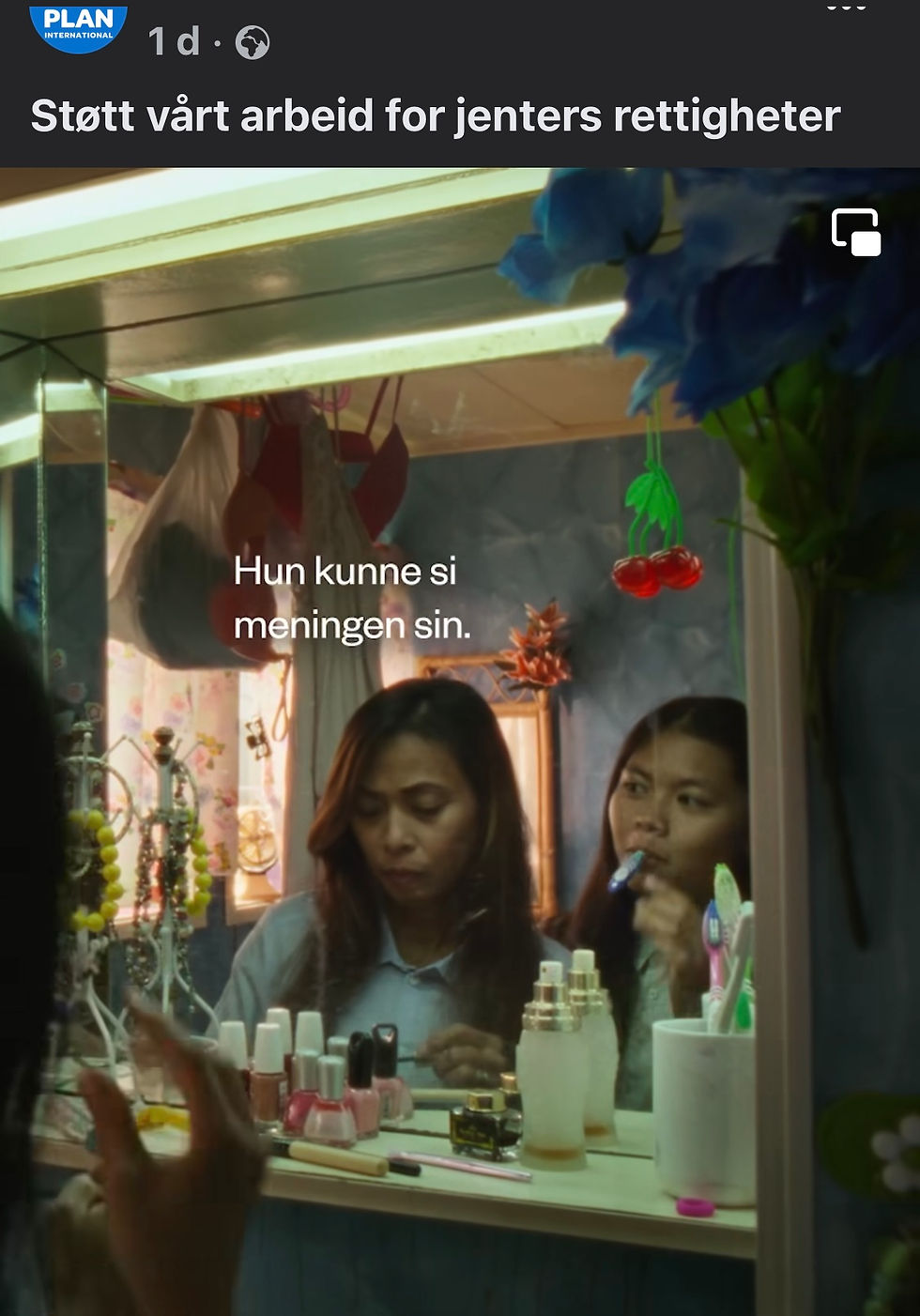
The last time I acted in front of the camera was when Ysabella and I participated in an NGO's campaign on children’s rights here in Norway. Being in front of the camera is quite a surreal experience.
Filming.
Two weeks before filming, I almost backed out of the film contract after realising I had a scheduling conflict with another job I had already committed to. Fortunately, we managed to work out a solution, and production could move forward. Looking back, I didn’t fully appreciate how much it meant to accept the role—not just for myself, but because the director had placed so much faith in me, believing I was the right person for the main part.
The short film centres on a mother unable to grieve the death of her son, who ended his own life.

The director, Naoki, had a gift for guiding me through the emotional labyrinth of that moment, understanding every subtlety I needed to convey. That scene demanded a delicate balance, holding back a storm of emotion and letting it simmer just beneath the surface. To help me get there, the director and I imagined I was on a long, solitary drive, lost in thought. In that moment, I was completely absorbed in my own world, wrestling with questions about my life, pain, and the shadows of trauma and loss.
The director limited the number of production staff in the studio to make me feel more comfortable doing this particular scene. I only realised I might have done something right when a member of the production staff approached me after an intense scene, her eyes welling up as she told me she had been moved by watching from the monitor outside.
That scene demanded a delicate balance, holding back a storm of emotion and letting it simmer just beneath the surface. To help me get there, the director and I imagined I was on a long, solitary drive, lost in thought. In that moment, I was completely absorbed in my own world, wrestling with questions about my life, pain, and the shadows of trauma and loss.

Death.
Filming at Den Norske Filmskolen in Lillehammer happened at the same time as my younger brother’s interment. He passed away the very week I learned I had been cast. Though distance and different life choices had drifted us apart, I had never truly let myself grieve until then. Losing my prodigal brother felt like losing a piece of my own childhood. I mourned a life that never reached its full promise. I poured that sorrow into my performance, hoping it would honour him. Now, the film feels like a marker in my life, a quiet message to my brother that grief can be transformed into something more meaningful than pain.
Now, the film feels like a marker in my life, a quiet message to my brother that grief can be transformed into something more meaningful than pain.
Vision and life in the Diaspora.
Another thing I loved about the story and the director’s vision was the opportunity to speak Filipino in one scene, sharing a piece of my migration journey. He invited me to co-write a small but powerful moment that captures how so many Filipinos in the diaspora connect with their families across the world. I was surprised by how a 2-minute scene could convey the full weight of living far from your loved ones. The scene was a conversation, but we will only hear the main character’s voice. It is calculated, full of dodging the real topics that should be spoken about. The scene was full of unspoken love, wrapped in brief laughter, long pauses, and sighs.
Grief is never an easy story to tell. The voice of sorrow can be lost in the noise of everyday life, and sometimes it means quietly gathering the scattered pieces of yourself, all while remaining invisible to those around you. Grief is a solitary journey, difficult to put into words. Through this film, Naoki and his team try to capture a mother’s sorrow and the shared ache felt by so many in the diaspora.
The voice of sorrow can be lost in the noise of everyday life, and sometimes it means quietly gathering the scattered pieces of yourself, all while remaining invisible to those around you. Grief is a solitary journey, difficult to put into words.
Behind-the-Scenes.
Though I played a role in the film, I could not help but ask for permission to take a few behind-the-scenes photos. This also spurs some nostalgia for me, as I have been around many indie filmmaking scenes in the Philippines doing behind-the-scenes photography.
This is the fun part of the whole experience: being surrounded by creative people in film production, something I truly missed back in the Philippines. There is ICA, who is originally from Indonesia and also played a role in the film as my colleague. She has a very interesting story of her own, is easy to be around on set, and has a very vibrant character.
With Ica
En dag til - One more day.
En dag til, a film by Naoki Kawai, is a student film project. It is not intended for commercial release. I think I will still see the finished output, but I don’t know when I will get the link. Hopefully soon.
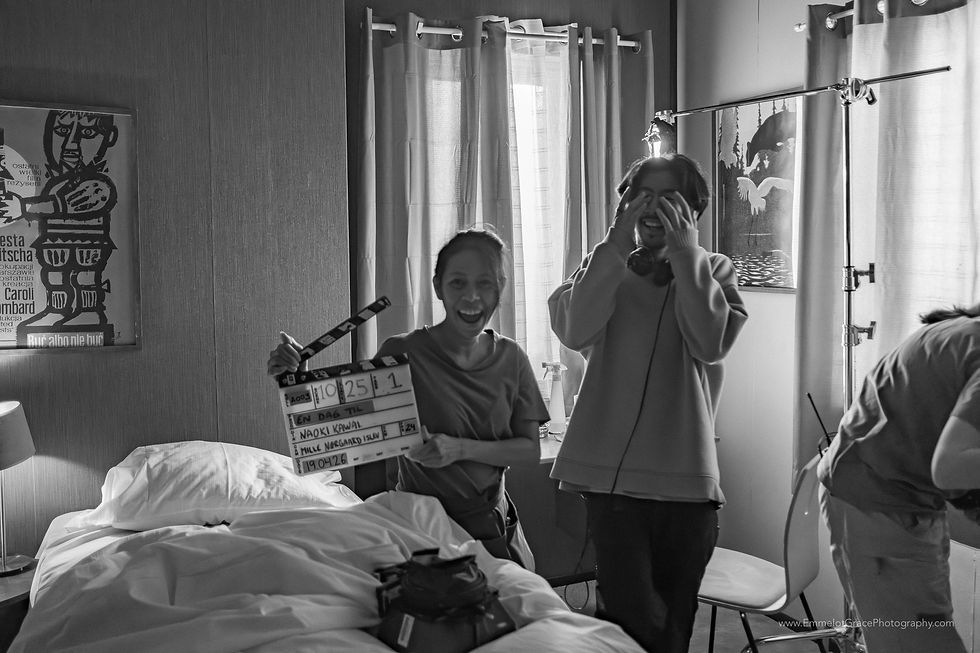
Naoki Kawai is a Japanese-Indonesian screenwriter and director based in Oslo, who completed a two-year film studies program at Høyskolen Kristiania. As a director, he is part of TalentNorge and Fabelaktiv’s program Filmtalent Innlandet 2.0, and, along with four other program participants, he won the M: Brane 2024 pitch contest with the TV series Young Horizon. Naoki is passionate about highlighting perspectives and experiences of “third culture kids”, who lack a sense of belonging, yet possess a richness in cultural identity, something many at an increasing rate can relate to, in Norway and internationally.

Words and photographs by:
Grace Orbon-Emmelot is a photographer and artist based in Norway. She captures portraits, landscapes, and stories through her lens. She focuses on storytelling through portraits, documentary, events, and landscapes. It features visual narratives that blend Filipino roots with Norwegian life and diaspora life, emphasising cultural stories, migration themes, and emotional connections.

![Diaspora to Dialogue [D2D] Forum Invites Community to Connect and Thrive](https://static.wixstatic.com/media/51518d_687b2808202741ddb1a43ecb455702d6~mv2.jpg/v1/fill/w_980,h_373,al_c,q_85,usm_0.66_1.00_0.01,enc_avif,quality_auto/51518d_687b2808202741ddb1a43ecb455702d6~mv2.jpg)

Comments